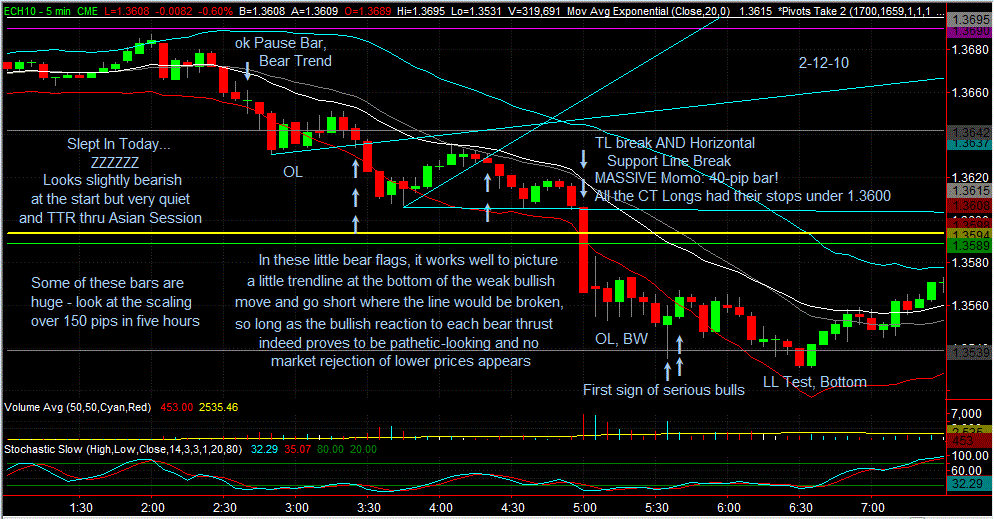
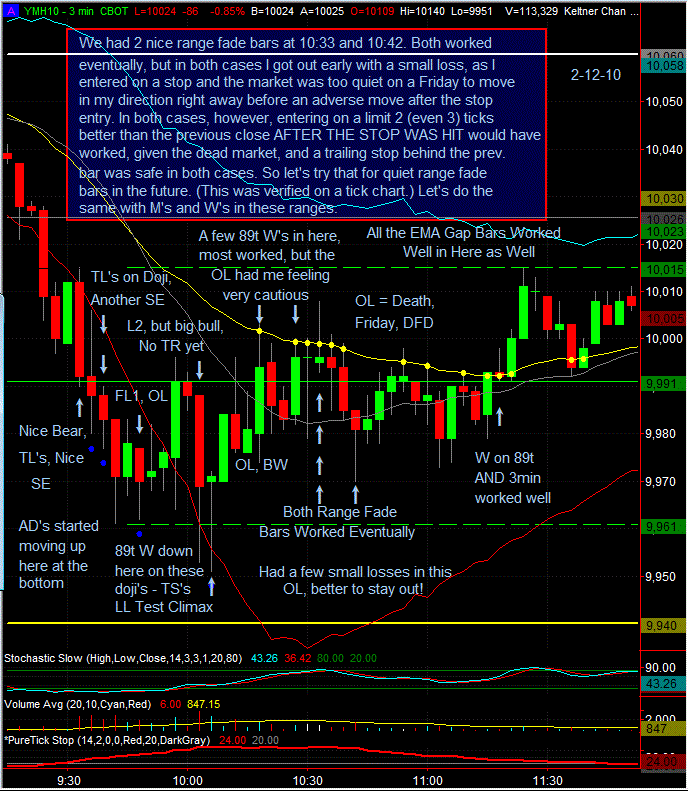
Most of these are from Al Brooks:
Excellent Post on the Truth About Trading: Part 1
http://carlfutia.blogspot.com/2009/08/here-is-first-of-two-post-by-fellow.html
Excellent Post on the Truth About Trading: Part 2
http://carlfutia.blogspot.com/2009/08/galdiator-x-speaks-part-ii.html
Good Trading Perspective from this Mission Statement:
There may be some overlap between the two set of slides.
These are from some webinars by Al Brooks
Much of this is from Al Brooks book, “Reading Price Charts Bar by Bar”
The rest of it is abbreviations that I use and some fairly basic trading concepts.
2BS = 2-Bar Spike, a form of breakout which is usually more reliable because of the longer duration and relatively symmetrical move. Two very strong trend bars in a direction qualify in a proper context.
2HM = A situation where the market has gone 2 hours without touching the moving average. Generally a with-trend limit entry at the moving average in a strong market.
5tF = 5-tick Failure. To get a 4-tick scalper’s profit, the market must move 6 ticks. If the market only moves 5 ticks in an anticipated direction and reverses, there will be traders trapped in the trade waiting for their 4-tick scalp and they will be quick to exit if the market reverses. Scalping demands a high winning %; there is very little room for losing trades.
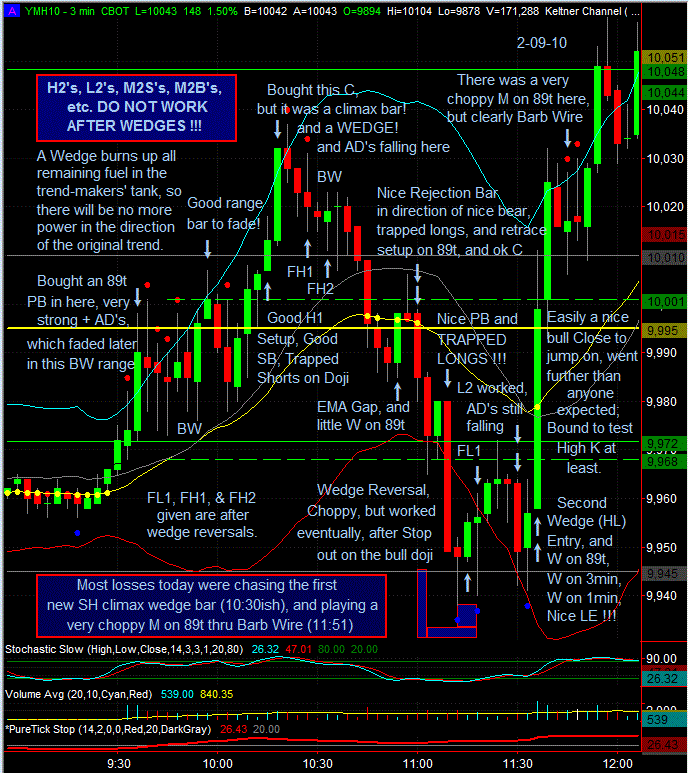
AD’s = Advance Decliner Index = (The number of NYSE stocks currently trading over yesterday’s closing price) – (The number of NYSE stocks currently trading under yesterday’s closing price) The NYSE has about 3000 stocks listed. Generally, levels between + / – 400 mark a pretty neutral market, while levels beyond + / – 1000 mark a market that has moved (and may continue to move) strongly.
BClx = Buy Climax, expect two legs sideways / down
BO = Breakout
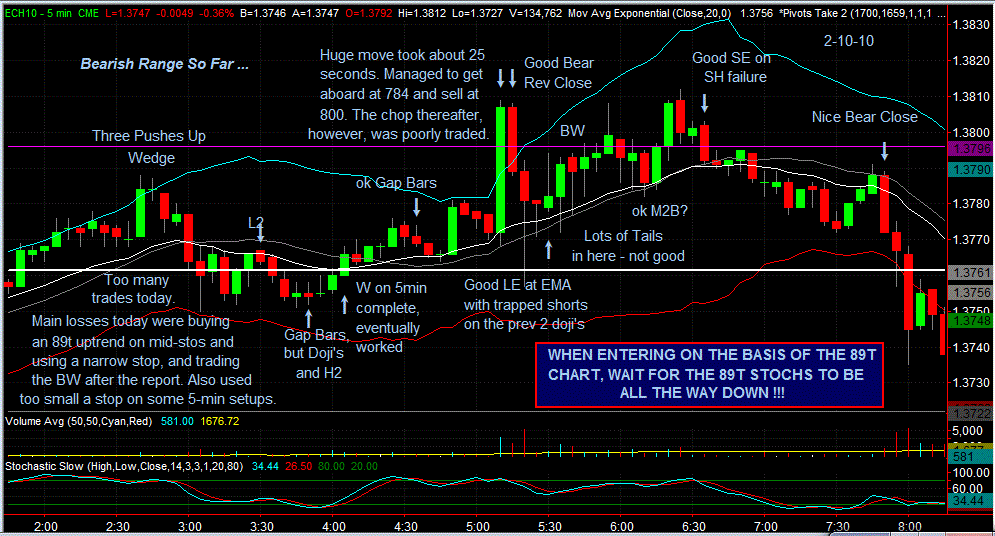
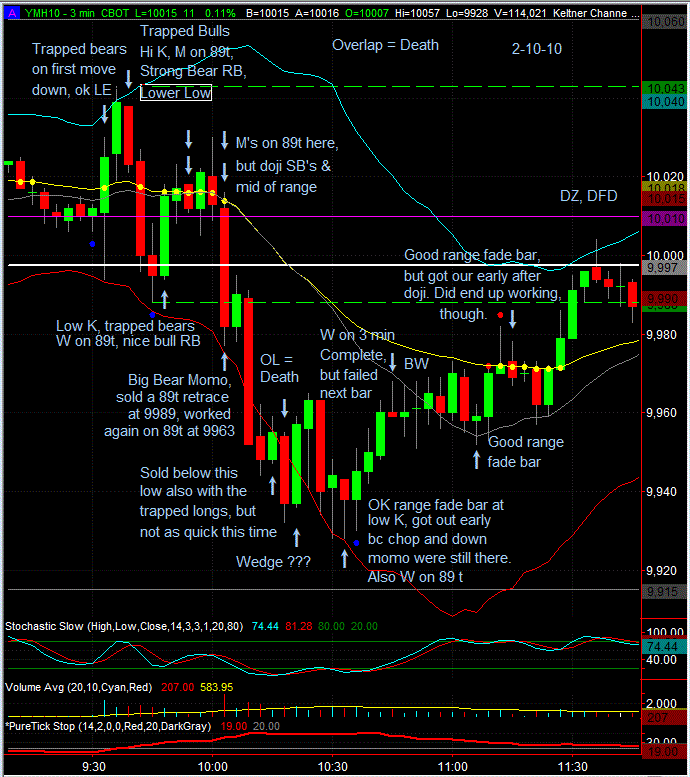
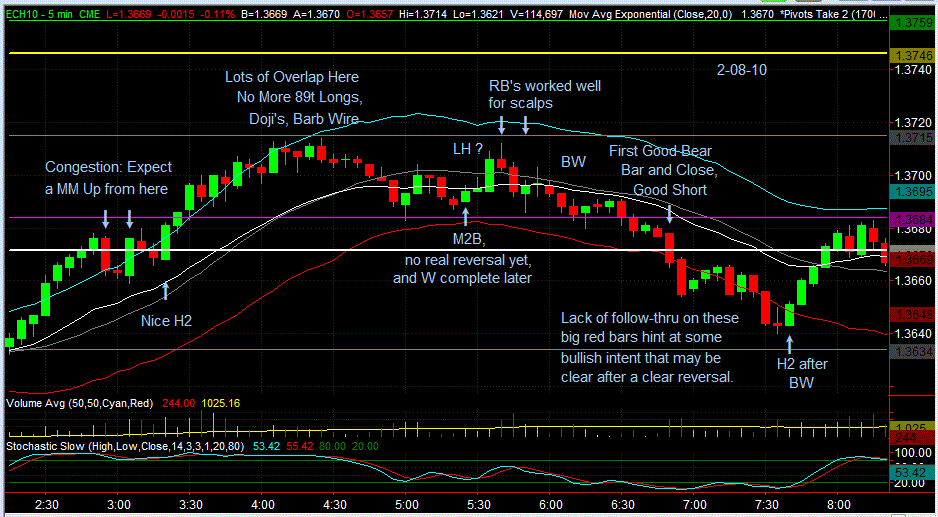
BW = Barb Wire
C = Close (of the Bar)
CD = Channel Down: A situation where several consecutive bars have had lower lows and highs in a linear shape. The first BO of a channel usually fails.
COY = Close of Yesterday
CT = Counter-Trend
CU = Channel Up: A situation where several consecutive bars have had higher lows and highs in a linear shape. The first BO of a channel usually fails.
DFD = Done for the Day
DB = Double Bottom
DBBF = Double-Bottom Bull Flag
DT = Double Top
DTBF = Double-Top Bear Flag
DUR = Down Up Reversal
DZ = Dead Zone (11:45AM to 1:45PM)
EB = Entry Bar
EMA = Exponential Moving Average
F = Failed
Fade = To trade in the opposite direction of (eg. a BO, so that you will be successful if the BO fails)
FBO = Failed Breakout
FEB = Failed Entry Bar
FF = Final Flag
Flag = A small, tight range after a big move. Generally, a continuation pattern (If we just had a bull spike, it’s now the bears’ turn, and if they can’t seem to get in gear, we will probably breakout on the upside.) The flag can have a slight CT slope, but should be nowhere near as steep as the original move and should look very range-ish.
Gap Bar = A bar whose low is above the EMA in a bear trend / range or whose high is below the EMA in a bull trend / range. The first such occurrence min a good trend or trending range can be a strong setup, depending on the context.
H (n) = nth attempt in the current downward pullback to resume the previous bull trend. H1 is the first bar in the PB with a higher high than the previous bar. H2 would be the second such occurrence. H2’s are the high-probability setup. The goal is to enter with-trend after a two-leg PB.
HOD = High of the Day
HOY = High of Yesterday
HTF = Higher Time Frame
K = Keltner Channel
L (n) = nth attempt in the current upward pullback to resume the previous bear trend. L1 is the first bar in the PB with a lower low than the previous bar. L2 would be the second such occurrence. L2’s are the high-probability setup. The goal is to enter with-trend after a two-leg PB.
LE = Long Entry
LLE = Limit Long Entry
LOD = Low of the Day
LOY = Low of Yesterday
LSE = Limit Short Entry
LX = Long Exit
OL = Overlap
M = a pattern consisting of a stronger leg up, a shorter leg down, a leg up to roughly the area of the first peak, and a leg down that falls below the midpoint low. In theory, traders who initiated a long position at the previous low and did not sell would be carrying a loss as soon as the final leg falls below their entry point and would have to exit, driving the market down further. Sometimes useful as a contributing factor in a trade.
mW = MicroWedge: a pattern of decreasing momentum after a mature directional move, indicated by more tails at the extreme, smaller bodies, poss. bodies in the opposite direction, indicating that CT traders are getting stronger at a new swing point on the day.
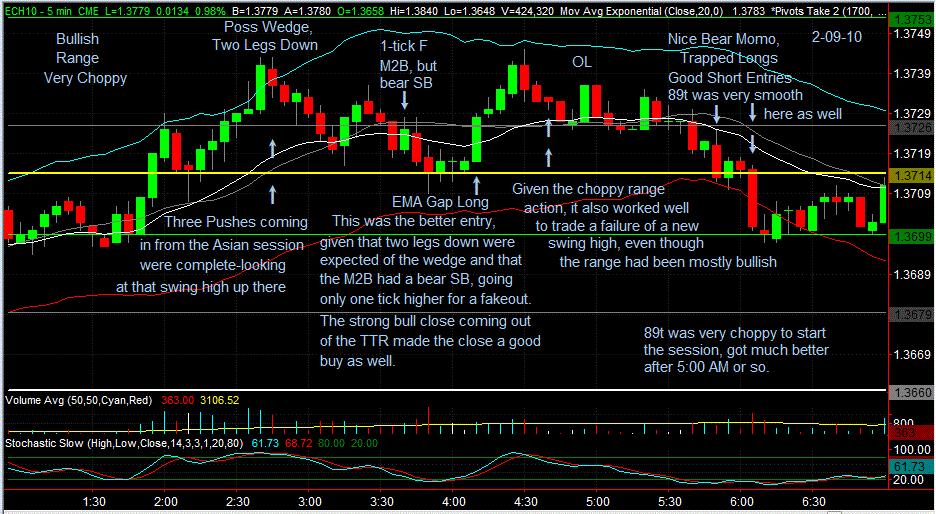
M2B = A H2 setup near or at the EMA. The highest-probability H2.
M2S = A L2 setup near or at the EMA. The highest-probability L2.
MM = Measured Move – Based on the tendency of a market to continue for a second leg (roughly the same distance as the first) in the same direction from a very thick or thin area on the chart after putting in a Swing High / Low.
Momo = Momentum
OD = Outside Down
OU = Outside Up
PB = Pullback (or Pause Bar, which is a Pullback)
R = Rising
RB = Reversal Bar (Note that, in a strong trend, most reversals fail and become WT setups. Generally, if the market is trending, the best way to trade reversals is to wait until they fail and enter WT where the poor CT losers need to get out with their loss. If the market is range-bound, trading a reversal at support / resistance – as a F BO, can be a valid strategy.)
RF = Range Fade (In a tight trading range or channel where most of the bars overlap most of the prior bars, shorting beneath a bar that forms above the range is often a good trade, as is buying above a bar that forms beneath the range, depending on the context.)
RR = Risk-Reward
SB = Signal Bar
SClx = Sell Climax, expect two legs sideways / up
SE = Short Entry
SH = Swing High
SL = Swing Low
SLE = Stop Long Entry
SSE = Stop Short Entry
SX = Short Exit
TB = Trend Bar or Triple Bottom
TCL = Trend Channel Line
THIR = Too High in the Range
THOL = Too High Off the Low
TL = Trendline
TLIR = Too Low in the Range
TLOH = Too Low Off the High
TL’s = Trapped Longs
TR = Trading Range
TRev = Trend Reversal
TRPA = Trading Range Price Action, where the market is forming bars that lack any clear directional bias.
TS’s = Trapped Shorts
TT = Triple Top
TTR = Tight Trading Range
UDR = Up Down Reversal
W = a pattern consisting of a stronger leg down, a shorter leg up, a leg down to roughly the area of the first bottom, and a leg up that exceeds the midpoint high. In theory, traders who initiated a short position at the previous peak and did not cover would be carrying a loss as soon as the final leg exceeds their entry point and would have to exit, driving the market up further. Sometimes useful as a contributing factor in a trade. More recently, I’ve just been using “W” to refer to a Wedge pattern.
Wedge = A three-push pattern that can be roughly contained by two converging lines, both going in the direction of the trend, and generally ending in a sharp spike climax. Wedges can be reversal pattern for at least 2 CT legs.
WT = With-Trend
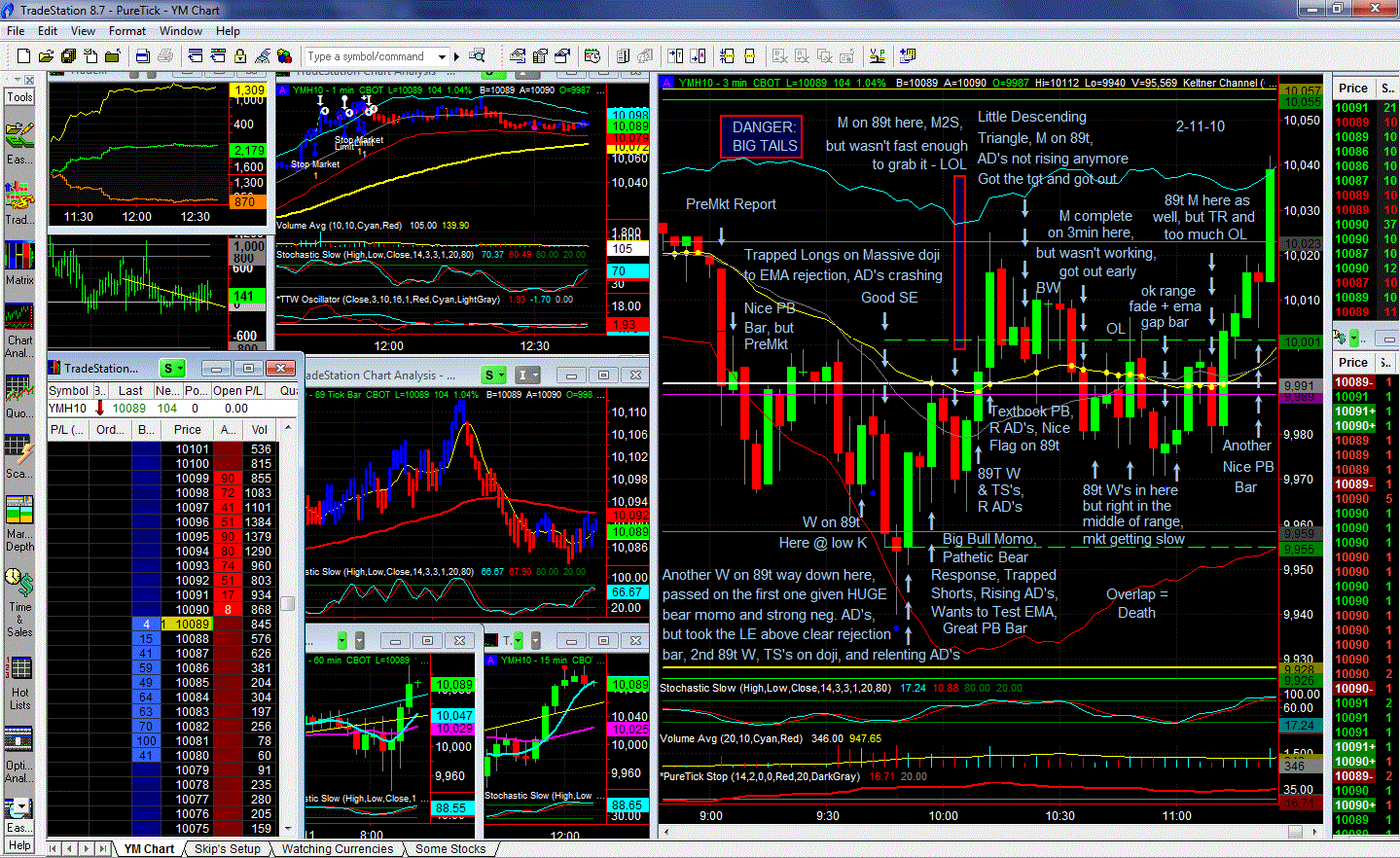
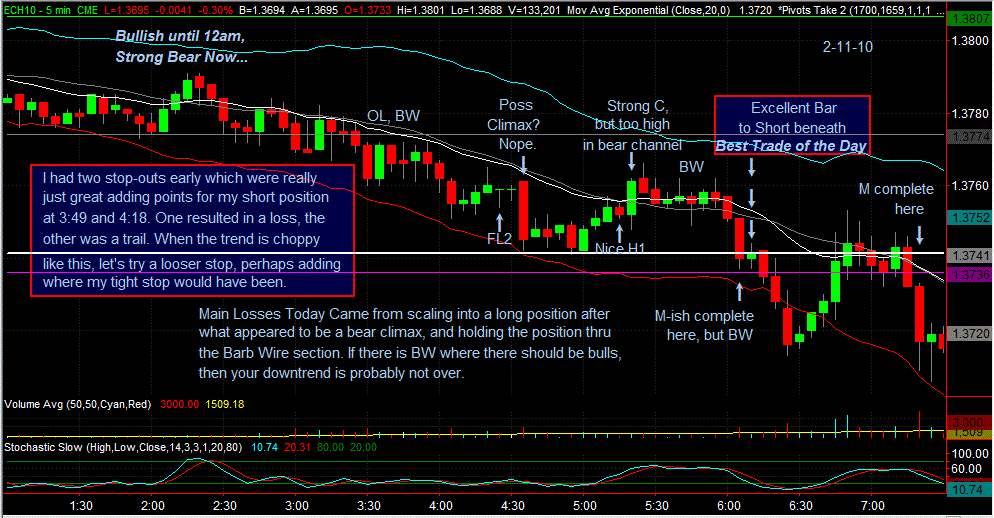


 Student Trader